SupremeCourt

  • Subscribe to our RSS feed.
  • Twitter
  • StumbleUpon
  • Reddit
  • Facebook
  • Digg

Saturday, February 9, 2013

RetractionWatch fiasco: Manipulation of DMCA notices to stifle criticism

Posted on 10:00 PM by Unknown

This post is about an Indian plagiarizer who has alleged that the original is a copy, and claimed copyright protection for his ‘original’ works using the DMCA. 

Foul play against RetractionWatch: 
A lot of published scientific reports and studies end up getting discredited for various reasons on a regular basis. These are consequently partially or wholly retracted. RetractionWatch is a blog solely dedicated to reporting retractions in the medical research field. Until Adam Marcus’ and Ivan Oransky’s RetractionWatch came into being, the retractions were quite scattered, and it was nearly impossible to track a scientific study’s status to figure which part of the reports were reliable. The blog publishes all retractions regularly and has chronicled many research frauds since its inception.

This noble pursuit took an unexpected beating lately, when WordPress.com (hosts RetractionWatch) in compliance of a DMCA takedown notice received by it, took down ten posts from RetractionWatch. The DMCA notice was sent pursuant to a copyright infringement complaint filed by Newsbulet.in(directs to newsbullet.in), the senior editor of which is a Mr. Chatwal based in Noida[India].

The alleged infringing material concerns retracted papers by Dr. Anil Potti, an MBBS from CMC Vellore. He has ten retractions to his credit on RetractionWatch (until they were taken down), and seems to enjoy a dubious reputation in the Medical Community. Mr.Chatwal claimed that RetractionWatch copied the blog posts (relating to Dr. Potti) from his obscure news reporting website Newsbulet.in. This claim is absolutely ridiculous because RetractionWatch published the retractions[in January 2011, and earlier] long before NewsBulet.in was even created in October 2012. Further, RetractionWatch said:

“If you click on any of the NewsBulet.In URLs provided in the takedown notice, you will indeed find the text — and images — from ten of our posts about Anil Potti. But as will be abundantly clear to anyone who does so that our text was placed on NewsBulet.In, not the other way around…

….We have responded to Automattic[owns Wordpress] with a counter-notice, and look forward to a speedy resolution of this situation, beginning with the Potti posts being reinstated.”
Moreover, Dr. Anil Potti had also hired an online reputation management agency to resurrect his career . All these moves reek of a mala fide intent to only further Dr. Anil Potti’s interests.

Background on DMCA takedown notice:
In the USA, Digital Millennium Copyright Act [DMCA] mandates that Online Service Providers(OSPs) may be protected from copyright infringement liability provided they implement a policy which empowers them to check infringement by their users and terminate accounts of repeat offenders. This allows OSPs to claim immunity from copyright liability under the safe harbour provisions[ s 512(a)-(d) of DMCA]. The statute expressly describes two ways in which an OSP can be put on notice of infringing material on its system:

a) notice from the copyright owner, which asserts that he is the correct owner of the material under penalty of perjury, known as notice and take down, and

b) the existence of “red flags.”

After the issuance of a takedown notice, the alleged infringer has the option of sending a counter-notice to the OSP, which RetractionWatch has duly done. This is an informative flowchart on the process.

What is alarming however, is the blatant misuse of the process and undue harassment suffered by legitimate authors such as RetractionWatch. In fact, this is not the first time such notices have been used to stifle criticism and suppress the truth. Gauging by such cases, such notices are only going to increase with people set to abuse the DMCA procedure for personal motives.

For a more in-depth investigative read on the issue, click here.

Read More
Posted in Copyright, DMCA, plagiarism | No comments

IPAB directs IPO to accept national phase patent application originally filed with less fees

Posted on 2:19 AM by Unknown
In a recent decision issued by the IPAB, the Board in yet another excellent decision issued by Justices Sridevan and Parmar, has suggested to the patent office to implement a revised numbering scheme for applications.   The decision was issued in a case to direct the patent office to accept a national phase application filed with less than the prescribed fees.  (Decision).  

In my view, the patent office has ducked a major issue for now: receiving extra fees from applicants who enter national phase with a reduced set of claims than at the international application filing stage.  This extra money goes to the coffers of the patent office, and the applicants have to pay this fees even when there is no examination of the cancelled / deleted claims.  This issue is not just limited to collecting extra fees for cancelled claims.  Our patent office charges higher fees wherever possible - and a possibility always remains  - invitation for applicants to litigate.  

For example, patent office charges arbitrarily extra fees for gene sequences applications (post), patent office charges higher fees for providing information under the RTI Act (post), and this case (patent office charges fees for cancelled / deleted claims). These instances together show that the patent office wherever possible collects extra fees from the public.  The logic seems to be - collect extra money where possible - but the extra money collected is not applied for the benefit of the public, or it is not seen that it is applied for the benefit of the public.  After all, patents are granted because they serve a public purpose / policy, yet when it comes to the application of funds, the patent office applies a same yardstick for all - pay and play - no pay no play.  One concrete example is the RTI applications requesting information: patent office can easily provide the information under the RTI Act @ a lower fee but it chooses to charge a higher fee under the scheme of the patents act.              
   
Facts: An applicant had submitted a PCT application with 20 claims.  At the national phase entry stage three claims were cancelled, and the applicant tried to the application with the fees for 17 claims only.  This process was done before the expiry of the 31 month deadline.   However, the controller returned the application on the ground that the fees was insufficient. 

Issue:  Aggrieved by the Controller's decision returning the application, the applicant approached the IPAB. 

Applicable Law:  Under section 138 (4) of the Patents Act, 1970, (hereafter "Act") a PCT application designating India has the effect of filing an application for patent under section 7, 54 and 134 and the title, description, claims, abstract and drawings, if any, filed at the international application stage are to be taken as complete  specification for the purposes of the Act.  Section 139 provides that all the provisions of Act apply to a convention application.  

Under the applicable law, the applicant was required to file the complete specification as filed in the international application.  This application contained 20 claims.  According to First Schedule (Rule 7 of the Patents Rules (hereafter "Rules"), a fee of Rs.1000/- is prescribed for filing Form 1 and an additional fee of Rs.200/- for each claim in excess of 10 claims is to be paid.  

In this case, the applicant should have paid a fees of Rs.3000: Rs. 1000 for FORM 1, and additional claim fees @ Rs.200 for 10 extra claims.   However, the applicant paid only Rs. 2500.  And the Controller had returned the application on the ground that the fees were insufficient. 

Conclusion:  Allowing the appeal from the applicant, the IPAB directed the Controller to take the application on record.   Because "the Controller’s rejection of the application on the last date only on the ground of insufficient of fees appears to be unreasonable since the appellant has not been given an opportunity to rectify his mistake.  The patent application may fail for other reasons but not because perhaps by a miscalculation or arithmetical error, the correct fees has not paid.  In this case there are the following factors which persuade us to interfere. 1) The rejection of the application was beyond the 31 months making it impossible for the applicant to set the lapse right. Therefore, we must allow the appeal."   
Read More
Posted in Fees, IPAB, Patent act, Patent Prosecution, Patent Strategies, Prashant, Rajiv, shamnad | No comments

Friday, February 8, 2013

SpicyIP Events: MIP's 2nd Annual India IP and Innovation Forum

Posted on 2:26 AM by Unknown
Managing IP will be holding its 2nd Annual India IP and Innovation Forum on March 7th, 2013 at Le Meridian, New Delhi. Please see more details below:

"It is generally expected that despite economic difficulties in 2012, India is set to see a steady rate of improvement in 2013 where its business and innovation are concerned. Earlier this month a feature in the Financial Times stated that: ‘India’s prospects have now started to improve. Investors, economists and the government say economic growth will accelerate in the coming year.’  In a separate recent article the FT Reports: ‘Forecast-beating results from Infosys… prompted the biggest daily gain in the IT company’s shares in a decade and raised hopes of a recovery in confidence in Indian business.’

Whilst levels of optimism may vary it is clear that optimism is pervasive when it comes to India’s technological and economic growth in 2013.  Corporations wishing to keep a step ahead will now be aggressively ensuring that their intellectual assets are properly protected and furthermore, that a well advised and insightful management of their IP portfolios will reap enhanced profit and overall economic reward for their businesses.

Managing IP’s 2nd Annual India IP and Innovation Forum takes into account these pressing needs for businesses operating in India and will address a range of pertinent topics during a day of panel discussions, case studies and thought sharing. Discussions will be delivered by leading experts from India, Europe and the USA. 

Speakers include:
·         Viswanathan Seshan, Philips Electronics India
·         R. Lakshminarayanan, Samsung
·         Nilesh Puntambekar, Emerson Innovation Center
·         Akhilesh K Gupta, President, Patent Agents Association of India
·         Dr Beatrice Striner, Université Neuchâtel

Don’t miss this opportunity to register your place and join your peers who are leading India innovation and growth. In-house counsel attend for FREE.  
For general enquiries or more information on the event, visit the website or contact karen.ko@euromoneyasia.com" 
Read More
Posted in | No comments

Thursday, February 7, 2013

New Unitary Patent System For Europe

Posted on 6:20 PM by Unknown
On December 11, 2012, the European Parliament adopted two draft regulations on the creation of a new unitary patent system in Europe. The new unitary patent system, which is set to be introduced in 2014 has to be granted by the European Patent Office. 

This unitary patent, which will coexist with the national patents as well as the classical European patent, will provide legal protection for the applicants in 25 member countries of the European Union through a single administrative step. (Italy and Spain are the two EU member countries that have objected to the system) The unitary patent will be considered as a single patent which does not require validation, including translation, in every member state. It also does not require to be administered nationally in each and every State respectively. This saves the applicant significant hassle in terms of time and money, as massive amounts of money is currently spent translating the relevant paperwork to the languages of the respective European Union member country. Under this system, the applications and approvals need to be made available in only one of the three languages, namely English, French and German.

Moreover, under the current regime the patent holder has to approach the national Courts of each EU member country separately for the enforcement of their rights. However, the unitary patent system envisages a Unified Patent Court whose decisions on validity and infringement will be binding on 25 EU member countries. Such a Unified Patent Court is intended to not only reduce litigation costs but also to help do away with the problems of delayed proceedings and conflicting decisions.

The Unified Patent Court comprises of a Court of First Instance, Court of Appeal as well as a Registry. The Court of First Instance is divided into local and regional divisions as well as a Central division. The Central Division is based in Paris, with branches in London and Munich. (The distribution of cases within the Central Division can be found in Tabular format in Annex II of the Agreement on a Unified Patent Court.) The Court of Appeal is located at Luxembourg.

The unitary patent system has been intended by the European Parliament to make Europe an attractive destination for inventors by reducing delays, costs and other administrative hassles in enforcing patent holders’ rights. However, the system has been criticized on the issues of maintenance fees and forum shopping. The maintenance fee levels of the unitary patent system are currently unknown. In a situation where the fee levels are very high, under the unitary patent system, the inventor will have no option of dropping a few countries in order to pay a lower fee. (This option is currently available to inventors.) The issue of forum shopping is with respect to the risk of certain local divisions of the Unified Patent Court demonstrating a stance favourable to the patentee in order to attract more cases.

The Unitary Patent system is presently being challenged at the Court of Justice of the European Union by Italy and Spain. Their contentions include the argument that the Unitary Patent system would unfairly discriminate against companies that do not work in English, French or German languages. Italy and Spain assert that a consequent result of the system would be that the commercial trade in innovative products would be preferred with companies that work in the above mentioned languages. Moreover, the lack of translations in the respective EU member countries may result in problems when prospective patent applicants have to determine prior art before filing an application. Another major question that is being debated currently is the necessity for a patent in 25 EU countries. This is problematic not only from a maintenance fee perspective, as noted above but also as statistics suggest that there is minimal patenting activity in countries other than England, France and Germany.

As of now, this unitary patent may be requested from 1 January 2014 or from the date of entry into force of the Agreement on a Unified Patent Court.

(For a more detailed analysis of the problems of the Unitary Patent system in EU, readers can refer to this blog post.)
Read More
Posted in EU, Gopika, Patent | No comments

Is there a need to break up the cartels in the radio – music labels negotiations?

Posted on 9:44 AM by Unknown
Image from here
One of the biggest Indian copyright litigation cases in the last decade has been the compulsory licensing battles between the radio and music industries. The newly founded private radio stations, in 1999, had wanted access to music and could not agree with the music labels on a reasonably royalty. 

One aspect of this litigation which intrigued me is the negotiating positions adopted by both sides. In the two rounds of litigation before the Copyright Board, the radio stations have made almost identical demands; in the first round radio stations were ready to pay about Rs. 190 per needle hour and in the second round, all the radio stations with the exception of Radio Mirchi, were offering between 0.1% to 2.5% of net advertising revenue. What I find striking about this negotiating strategy is the almost co-ordinated offers made by the radio industry. Is such co-ordination and collaboration within the bounds of competition law or would it constitute cartel-like behaviour? Shouldn’t these radio stations be in competition with each other and offer competing rates depending on their location? Can a radio station in New Delhi be allowed to licence music at the same rate as the radio station in Jabalpur? Isn’t that what competition is all about? Should the radio stations not offer to pay different for different genres of music? If not, we will have situation where all radio stations will be playing the same music and the customer suffers because there is no diversity in music offered by these radio stations. 

Things are no better with the music labels, most of whom made a joint offer through the window of PPL, the copyright society for sound recordings. In the first round PPL offered to licence music at Rs. 1,500 per needle hour and in the second round PPL offered to licence music at Rs. 2,400 per needle hour or 20% of the net advertising revenue. For those of you familiar with PPL, it has over 160 music labels as members. How can all 160 members offer a joint licence without falling foul of the restrictions against cartels in competition law? The music labels are a cause of much greater concern than the radio stations because there is a lot of diversity in the repertoire of the music labels. I don’t think the music label ‘Venus’ can demand the same kind of royalties as ‘Saregama’ and in such a scenario if both companies were to offer individual licences, the radio station in question may feel inclined to pay for only one of the music labels while junking the other music label. But now, given that music labels are engaging in collective bargaining the radio stations have pretty much no choice while dealing with the music labels. 

Let me also clarify that it is not my case that PPL should not be allowed to offer a blanket licence. Instead it my case that apart from offering a blanket licence, each player at PPL should be forced to offer individual licences and they obviously cannot be valued at the same level. How does this make a difference? Not only does such information make it easier for the Copyright Board to calculate, the royalty rates in a case of compulsory licence or statutory licensing but it also given the radio stations the opportunity to negotiate with only certain music labels. As things stand now, they simply do not have that opportunity. 

The millionaire dollar question is whether an issue like this will ever crop up before the Competition Commission of India before the next round of compulsory or statutory licensing litigation starts before the Copyright Board. There is already some litigation between HT Media and T-Series before the Competition Commission but I’m not sure of the scope of this litigation.
Read More
Posted in Competition law, Compulsory Licensing, radio | No comments

Wednesday, February 6, 2013

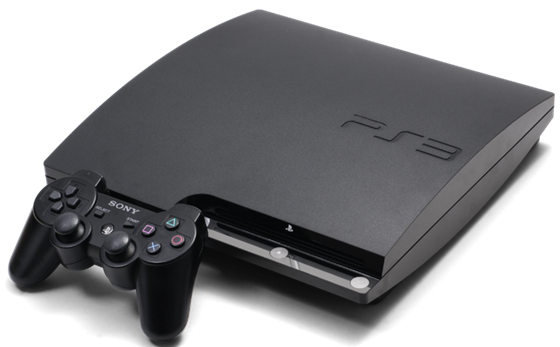
Jailbreaking Sony Playstations To Be Illegal in India? - First Test of Newly Inserted S.65A of the Indian Copyright Act, 2012

Posted on 7:15 AM by Unknown

In an order passed earlier this year, the Delhi High Court passed an ex-parte injunction against the defendants for circumventing Technology Protection Measures (TPM’s) in the Sony Playstation 3 and other Sony game consoles.

Given that the order was granted after the Copyright (Amendment) Act, 2012 was passed (although prior to notification), this is the first case to legally recognise the introduction of digital locks in hardware or software to protect copyright in India.

Importantly, the defendants are restrained from engaging in associated acts including “offering for sale” and “distributing modified game consoles”. This case, if the order is appealed, will test the ‘fair balance’ that was sought to be achieved with the importation of the DMCA-styled Section 65-A, which introducedanti-circumvention provisions, into Indian copyright law.

Section 65A and anti-circumvention laws in India

The insertion of anti-circumvention laws has been the subject of great debate since its addition to the Indian Copyright Act. The first question – was it necessary despite India not being a signatory to the WPPT and WCT (Internet Treaties) that mandate such measures? And if necessary, is the provision in its present form adept at striking the balance between copyright protection and the rights of non-infringers?

Swaraj Barooah has written a paper due for publication in the next issue of the NUJS Law Review where he argues that that since it is not the most efficient method of protecting copyright, especially when there are other alternatives available. Further, it appears to affect user rights by increasing transaction costs, affecting privacy and also raising security concerns. Having read a draft of his paper I would agree that perhaps this provision will do more harm than good.

Legality of Jailbreaking Playstations

The court expressly references the anti-circumvention laws in the Copyright Amendment Bill and authorises a Local Commissioner to seize necessary equipment and determine if they are counterfeit.

The lawyers for Sony essentially argued that the defendants were making ‘modifications and uploading pirated software in the form of games’. This raises the obvious concern about the scope of the term ‘modification’ and more fundamentally the question of whether a user should be allowed to change software on a device he or she legally owns.

Legally speaking, it is useful to study this act of jailbreaking in light of the newly inserted S.65A and whether this amounts to copyright infringement.


The order itself finds two ‘illegal acts’ – firstly, ‘modification without [Sony’s] consent’ and second, the introduction of pirated copies of games into these machines without license from Sony. I understand how the making of pirated copies could be a violation of Sony’s right to ‘reproduction’ of its games. But keeping that aside, I would argue that there does not appear to be (and should not be) any legal impediment to my right to change the underlying operating system, for example.

One finds that the clause in the Act itself is careful to only allow the law to operate if it ‘for the purpose of protecting any of the rights conferred by the Act’. This was also an issue raised by Pranesh Prakash of the CIS in an open discussion with Mr. Pravin Anand (Anand & Anand was the law firm representing Sony) at a recent copyrightlaw conference as it is unclear what right is being violated when a user ‘modifies’ his or her PlayStation. Incidentally, all the videos from the NUJS-CUSAT conference are available on YouTube here.


Non-infringing Circumventions and Copyright Office’s Role

My concern with the TPM provision, even if it allows for ‘fair use’ exceptions to override the clause like S.65A does, is the problem of deciding what constitutes fair use itself. Since courts in India are slow to react to technological challenges (and the more universal problem of law always playing catch-up to technology) it may be a good idea to invest the Indian Copyright Office with the task of reviewing exceptions to such anti-circumvention laws on a periodic basis. This would be identical to the current practice followed in the United States where the Librarian of Congress, every 3 years, announces the exceptions to the DMCA by establishing the ‘Rules for Exemptions Regarding Circumvention of Access-Control Technologies’.

Lastly, I would also argue that the order goes far beyond what was required since it restricts sale of modified consoles itself, despite there being no apparent copyright infringement in doing so. A mere order restricting the making and distribution of pirated games should have been sufficient in this case.

The court, in my opinion, appears to rely on the ‘consent’ of Sony and what it considers to be legal or not and not what the Act itself protects. Imagine if I had a Windows computer on which I could only install Microsoft programs. Or prevented from installing the Linux operating system on it and was forced to use Internet Explorer for the rest of eternity. This is very much like that.


(Note: A copy of the order is available here)
Read More
Posted in Copyright, Copyright Amendment Bill 2010, DRM, Piracy | No comments

Monday, February 4, 2013

Is the suit again the Registrar of Copyright maintainable under the law?

Posted on 9:05 PM by Unknown
Continuing from my earlier post today, available over here, I would like to briefly examine whether the lawsuit in question is even maintainable under the law as it stands. 

To briefly recap, since August, 2012 there have been three rounds of litigation wherein music labels have sought judicial intervention to restrain the Registrar of Copyrights from carrying on an inquiry into the state of affairs at IPRS. They have managed to succeed in large measure by filing a civil suit before Barasat Courts and have impleaded the Registrar of Copyrights as a party to the dispute. The District Judge appears to have restrained (to be confirmed) the Registrar from carrying out his inquiry any further until further hearings. 

While the exact prayer of the lawsuit filed by Aasha Audio is not clear, I’m still puzzled as to how the Registrar is being restrained from carrying out his statutory duties by a District Judge adjudicating a civil suit. The reason for my puzzlement is Section 76 of the Copyright Act, 1957. I reproduce the section as follows: 

76. Protection of action taken in good faith. - No suit or other legal proceeding shall lie against any person in respect of anything which is in good faith done or intended to be done in pursuance of this Act. 

The above provision gives the Registrar of Copyright and any other officer of the Central Government complete immunity from any lawsuit or legal proceeding for any action under the Copyright Act, 1957. This is a standard provision in all Indian legislation and is a form of sovereign immunity, which protects the government from being sued in civil courts. 

This provision obviously does not prohibit the filing of a legal proceeding before the High Courts for violation of the Constitution and the due process rights contained therein. The reason for this being the words “in pursuance of this Act” i.e. the Copyright Act, 1957. 

If the Registrar of Copyrights does not have the power to carry out this inquiry or if he is executing the inquiry in an unjust manner, the only relief for Asha Audio is to approach the High Court through a writ petition under Article 226. 

Why then is the Registrar being made party to these civil suits? 

There is a huge strategic advantage for Javed Akhtar to have these proceedings shifted to a High Court because not only is the adjudication at High Courts of a far superior quality to anything in the District Court, but also because the Government has much better lawyers in High Courts to defend the Registrar of Copyrights. If this case lands up in a High Court the Registrar of Copyrights will be defended by an Additional Solicitor General.
Read More
Posted in Copyright, IPRS | No comments
Newer Posts Older Posts Home
Subscribe to: Posts (Atom)

Popular Posts

  • Guest Post: Intermediary liability in defamation cases - Parle, Mouthshut & Visakha cases to clarify the law
    Chaitanya Ramachandran, who has blogged for us previously over here and here , has sent us this excellent guest post analyzing the extent of...
  • SpicyIP Tidbit: An IP Thriller from an IP lawyer
    In an exciting first for the community of intellectual property lawyers in India, Dr. Kalyan Kankanala has penned a thriller novel based, w...
  • Full Bench Delhi HC (Design Act)- Reckitt Benkiser India Ltd. v. Wyeth Ltd.
    Image from here A reference (order available here ) was made to a Full Bench of the Delhi High Court to consider as to what amounts to ‘prio...
  • India signs Nagoya protocol ahead of Hyderabad CBD meet
    GoI yesterday announced that  the Union Cabinet had approved the ratification of the Nagoya Protocol on Access and Benefit Sharing , which I...
  • SpicyIP Weekly Review(March- Week 5)
    SpicyIP Posts: The week started with L.Gopika informing us of a  wonderful initiative  by the Office of The Controller General Patents, Desi...
  • SpicyIP Events: Patracode announces Workshop on Tools for Researching and Managing Intellectual Property
    SpicyIP is pleased to announce Patracode's workshop on tools for researching and managing Intellectual Property. Interested participant...
  • Computer Confusion Confounded
    Computer software patentability continues to confound. So says this caustic certiorari petition filed at the US Supreme Court, passed on by ...
  • IP Research Assistant position at IIT, Madras
    Feroz Ali Khader, MHRD IP Chair at the Indian Institute of Technology (IIT) Madras, is looking for research assistants to work on various is...
  • Incentives through Recognition? Nobel Assembly sued for libel and unfair competition
    Image from here Incentives have generally proven troublesome in the context of the intellectual property regime. Right from questioning whet...
  • The Kit Kat Trademark Dispute
    On 22 April, the IPAB ruled on a trademark dispute between Swiss multinational Societe des Produits Nestle S.A (hereafter Nestle) and Kolkat...

Categories

  • 126 (1)
  • 3(d) (4)
  • 3(f) (1)
  • 3(i) (1)
  • 3(k) (2)
  • Academic Writing (1)
  • access (10)
  • access to food (1)
  • access to health (3)
  • AIA (1)
  • AIDS/HIV (3)
  • Antitrust (2)
  • Bajaj v LML (1)
  • Basmati Row (2)
  • Biological Diversity (5)
  • Biologics (2)
  • biopiracy (4)
  • biotech (7)
  • Bollywood (25)
  • Broadcasters Rights (5)
  • Budget (1)
  • business method patent (2)
  • Call for papers (2)
  • Cipla (2)
  • Comparative Advertising (4)
  • Competition law (8)
  • Compulsory Licensing (27)
  • condonation of delay (1)
  • Conference (4)
  • Constitution (12)
  • Contracts (1)
  • Controller's decisions (8)
  • Copyright (112)
  • Copyright Amendment Bill 2010 (23)
  • copyright board (4)
  • Copyright Exceptions (6)
  • copyright office (1)
  • Copyright Rules (2013) (5)
  • Copyright Societies (9)
  • Counterfeiting (1)
  • creativity (1)
  • Cross Retaliation (1)
  • csir (4)
  • d (1)
  • D.U. Photocopy Case (16)
  • Darjeeling Tea (3)
  • Data Exclusivity (2)
  • Database (1)
  • DCGI (2)
  • decompilation (2)
  • defamation (9)
  • Designs (3)
  • Designs Act (3)
  • Differential Pricing (2)
  • Dilution (1)
  • Disabilities (3)
  • Disability (2)
  • DMCA (2)
  • Doha Declaration (1)
  • Domain Names (2)
  • Draft Policy of the Indian Government (2)
  • DRM (1)
  • Drug Regulation (7)
  • education (12)
  • Enercon (1)
  • Enforcement (1)
  • EU (2)
  • ex parte (2)
  • exhaustion (3)
  • Exhaustion of Rights (2)
  • Fair Dealing (8)
  • Fair Use (11)
  • Federal Circuit (1)
  • Fees (3)
  • FICCI (7)
  • FRAND (2)
  • free trade agreement (3)
  • FTA (3)
  • G.I. Registry (4)
  • gene sequences (3)
  • Generic medicine (4)
  • Geographical Indication (14)
  • Gilead (1)
  • Glenmark (5)
  • Gopika (34)
  • Guest post (11)
  • guidelines (1)
  • GWU-CII (1)
  • Herceptin (1)
  • hot news (3)
  • ICANN (1)
  • incremental innovation (1)
  • independence (1)
  • india (5)
  • Indian Government (1)
  • Indian patent litigation (27)
  • Indian Pharma (35)
  • Injunction (10)
  • Innovation (7)
  • INTA (1)
  • Intermediaries (10)
  • internet (11)
  • Internet Access Providers (IAPs) (5)
  • Internet Censorship (7)
  • IP scholarship (3)
  • IP aware (4)
  • IP Course (3)
  • IP Education (1)
  • IP Policy (11)
  • IP update (4)
  • ip writing competition (1)
  • IPAB (34)
  • ipchair (1)
  • IPO (1)
  • IPRS (5)
  • IT Act (1)
  • Journal (2)
  • judicial independence (3)
  • Jurisdiction (1)
  • Kruttika (4)
  • Legal Education (3)
  • Legal Research Tools (1)
  • Legal Scholarship (2)
  • library (2)
  • Licensing (7)
  • Madhulika (20)
  • mathematical methods (1)
  • Media law (3)
  • medical method (1)
  • Merck (4)
  • mhrd ip chair (1)
  • Microsoft (3)
  • Middle Path (1)
  • Moral Rights (2)
  • Movies (18)
  • musical work (2)
  • nanotechnology (1)
  • Natco (3)
  • natco defamation suit (5)
  • natco vs bayer (4)
  • need for transparency (1)
  • Novartis (8)
  • Novartis patent case in India (11)
  • NPEs (2)
  • nujs (1)
  • NUJS Conference (2)
  • Obituary (1)
  • obviousness (7)
  • Off-Topic (2)
  • online course (4)
  • Open Access (6)
  • Open Source (2)
  • Opposition (3)
  • Parallel Imports (4)
  • Parliament (1)
  • passing off (5)
  • Patent (52)
  • Patent act (10)
  • patent agent (5)
  • patent agent exam (9)
  • patent agent exam qualifications (3)
  • patent infringement (5)
  • Patent Licensing (2)
  • Patent litigation (2)
  • Patent Office (19)
  • patent pool (3)
  • Patent Prosecution (7)
  • Patent rules (2)
  • Patent Strategies (8)
  • Patents (9)
  • pegasus (1)
  • Personality Rights (1)
  • Pfizer (1)
  • Pharma (18)
  • Piracy (5)
  • plagiarism (3)
  • Plant Variety Protection (2)
  • post grant (1)
  • Prashant (2)
  • Preventive Detention (1)
  • Price Control (6)
  • prior publication (1)
  • Privacy (3)
  • Prizes (1)
  • public health (3)
  • Public Interest (4)
  • Publicity Rights (4)
  • Publishing (3)
  • radio (2)
  • Rajiv (18)
  • Rectification Petition (2)
  • Rejection (1)
  • research (3)
  • reverse engineering (2)
  • revocation (4)
  • rip (1)
  • Roche (2)
  • Roche vs Cipla (1)
  • Royalty (2)
  • RTI (2)
  • Scholarship (4)
  • section 16 (1)
  • Section 3(d) (7)
  • section 8 (6)
  • shamnad (11)
  • Shan Kohli (4)
  • Shouvik Kumar Guha (30)
  • Smartphones/Tablets (2)
  • Social Innovation (1)
  • Software (10)
  • software enforcement (3)
  • software patent (3)
  • Special 301 Report (1)
  • Spicy Tidbits (6)
  • spicyip (1)
  • SpicyIP Accolades (1)
  • SpicyIP Announcements (9)
  • SpicyIP Case (1)
  • SpicyIP Cases (3)
  • spicyip commiseration (1)
  • SpicyIP Events (11)
  • SpicyIP Fellowship (5)
  • SpicyIP Guest Series (22)
  • SpicyIP Interview (2)
  • SpicyIP Jobs (4)
  • SpicyIP Jobs/General (2)
  • SpicyIP Review (1)
  • SpicyIP Tidbits (11)
  • SpicyIP Weekly Review (27)
  • Statutory Licensing (1)
  • STI Policy 2013 (4)
  • Sugen (3)
  • Supreme Court of India (5)
  • Swaraj (19)
  • Tarnishment (1)
  • Technology (6)
  • Technology Transfer (5)
  • TKDL (5)
  • TPP (1)
  • trade (4)
  • Trade Secret Protection (1)
  • Trademark (59)
  • Trademark dilution (1)
  • Trademark Registry (9)
  • Traditional Knowledge (7)
  • Transparency (5)
  • treaty (1)
  • trial (1)
  • tribunals (2)
  • TRIPS (11)
  • UK (3)
  • unfair competition (5)
  • UNFCCC (1)
  • Universities Research and Innovation Bill (2)
  • US (1)
  • US Patent Reform (1)
  • US Supreme Court (3)
  • viva (3)
  • WIPO (5)
  • Working a Patent (2)
  • Workshop (4)
  • writ (1)
  • WTO (1)

Blog Archive

  • ▼  2013 (364)
    • ▼  September (13)
      • Guest Post: Intermediary liability in defamation c...
      • Breaking News: Kerala HC ends suo moto proceedings...
      • Copyright Amendments: A Fair Balance?
      • Eucador Trademark Registry decision on Gandhi Trad...
      • Computer Confusion Confounded
      • Microsoft - Nokia deal: A paradigm shift in the st...
      • IP Research Assistant position at IIT, Madras
      • Patent Hypocrisy and the Paradox of Indian IP
      • SpicyIP Tidbit: Zanjeer- Salim/Javed Settle with P...
      • Delhi HC rejects the "Hot News" Doctrine: A Summary
      • Bombay HC: Remake Zanjeer to be released
      • IPAB revocation of Allergan’s Combigan patent: Vie...
      • Cold News for Cricket Score Monopolies: India Reje...
    • ►  August (41)
    • ►  July (36)
    • ►  June (36)
    • ►  May (32)
    • ►  April (51)
    • ►  March (66)
    • ►  February (40)
    • ►  January (49)
  • ►  2012 (131)
    • ►  December (29)
    • ►  November (42)
    • ►  October (50)
    • ►  September (10)
Powered by Blogger.