SupremeCourt

  • Subscribe to our RSS feed.
  • Twitter
  • StumbleUpon
  • Reddit
  • Facebook
  • Digg
Showing posts with label natco defamation suit. Show all posts

Sunday, June 2, 2013

Indian publisher threatens blogger with 1 billion $ defamation suit: The Streisand effect?

Posted on 2:22 AM by Unknown
Disturbing trend we have here with defamation law suits being used to quell free speech and public participation!


Last year Shamnad was sued by NATCO for alleged defamation (see his response here) and more recently one of our student bloggers Aparajita received a notice from Times Publishing House threatening legal action for alleged defamation. Prashant’s incisive blog post on this can be accessed here.The story as well as Shamnad’s delightfully sarcastic response to the legal notice served by Times publishing house has been lapped up by the mainstream media including Hindu (here) and Sans serif (here) amongst others. The hoot represents a civil society initiative on free speech issues and tracks cases concerning media freedom. The hoot has an excellent take on such SLAPP (strategic lawsuits against public participation) suits which are increasingly being used as an intimidation tactic to censor critics.Globally the chillingeffects site presents analysis of such legal threats to enable recipients resist the chilling of legitimate activities.A campaign to preserve free speech and decriminalize defamation must be launched, and we do hope that you will join us in this fight.

So here we go again, recently a blogger by the name Jeffrey Beall was threatened by an Indian publisher with a 1 billion dollar lawsuit approx. 5400 crore Rs.(seriously, how do they come up with such fancy numbers?). This story has been making news for quite some time and we thought it was appropriate to blog about it in light of the recent events that have plagued our very own bloggers.


Dr.Evil Image from here

Background:

Open access gained popularity somewhere around 2003 with the introduction of reputed peer-reviewed journals like PLoS (public library of science).The popularity of author pays for open access model has been exploited by some publishers. Researchers are worried about the rise in number of journals with questionable peer review system who are willing to publish just about anything for a price. The problem with this trend is that non-experts doing online research, unacquainted with the workings of the journal sphere will face difficulties distinguishing the wheat from the chaff.

Beall’s list and OMICS group

Jeffrey Beall, a metadata librarian at the University of Colorado Denver, runs a blog by the name scholarly open access where he writes about issues pertaining to the open-access journal industry.Beall’s blog is pretty popular has been featured in Nature and New York Times. Beall maintains a list (Beall’s list) of what he calls “Potential, possible, or probable predatory scholarly open-access journals and publishers”. Beall’s list can be accessed here and here. 

Beall identifies and compiles a list of journals who according to him cash in on researchers desperate need to get their published.OMICS publishing group(an India based publisher) has earned the dubious distinction of being featured in Beall’s list amongst other such publishers based on the criteria detailed here.Beall has discussed in detail the OMICS group practices in several of his blog posts.

In fact one commentator on a science-insider story on this issue questioned the credibility of a paper entitled “Dinosaurs: Extinct or Traumatized?” published by OMICS Group in their Journal of Trauma & Treatment. OMICS has removed this paper from its website since, but the commentator has generously made available details of this paper in this blog post here.

Get a load of this( some interesting para's)

He is Who that created the heavens and the earth and what is between them in six days, and He is established on the Throne of Power [1].Jesus confirmed that mankind has existed “from the beginning of the creation”, so all kinds of living things were brought into existence in the same initial creation days which are six as Moses confirms as well [12]; and thus, this hypothesis that “the earth was peopled by oviparous quadrupeds of a most appealing magnitude, and reptiles were ‘Lords of the Creation’ before the existence of human race” [13] seems to be of a kind neither logical nor verifiable.

Obviously statements like these have us wondering whether the journal has a peer-review system at all.

Intimidation:

Beall’s blog posts and their popularity have clearly ruffled OMICS group owner Srinu Babu Gedela’s feathers. An Indian IP mgmt. firm, IP Markets informed Beall in a 6 page letter can be accessed here, that they would be suing for damages amounting to USD 1 billion.

Some Excerpts from the letter (sic):

“All the allegation that you have mentioned in your blog are nothing more than fantastic figment of imagination by you and the purpose of writing this blog seems to be a deliberate attempt to defame our client. Our client perceive the blog as mindless rattle of a incoherent person and please be assured that our client has taken a very serious note of the language, tone and tenure adopted by you as well as the criminal acts of putting the same on internet. The copy of this notice is also being addressed to various other entities that have relied on your baseless utterance to publish their own material. Please be enlightened that your act of posting such content on the internet has exposed you for criminal proceedings which also attract a three year imprisonment. Our client has been advised to initiate the said proceedings in USA and in INDIA against you. Such sought of irresponsible publishing will not be tolerated. Your article also smacks of racial discrimination against an Indian Publishing company and on this ground the issue will be viewed seriously and an appropriate action would be initiated”

The Chronicle of Higher Education has quoted Mr. Beall as saying "I found the letter to be poorly written and personally threatening, I think the letter is an attempt to detract from the enormity of OMICS's editorial practices." 

Legal questions:

Popehat has an excellent analysis of this issue, which states that a civil judgement against Mr. Beall would be unenforceable in the States, because the SPEECH act prohibits any federal/state court from recognizing/enforcing foreign judgement for defamation unless some conditions are satisfied. Also, pressing criminal charges against Mr. Beall would require extradition to India and the treaty between the US and India requires dual criminality (offense should be a crime in both countries) .OMICS may have a case in the United States provided they satisfy their burden under U.S. law — for instance, by showing that Mr. Beall made provably false statements of fact (seems unlikely).

What these censors tend to ignore is the Streisand effect. Censoring critics and suppressing information more often than not, tends to have quite the opposite effect. News which would have otherwise languished in obscurity generates additional attention and goes viral (so much for trying to suppress).
Read More
Posted in defamation, Madhulika, Media law, natco defamation suit, shamnad | No comments

Tuesday, May 21, 2013

The Times Publishing House threatens to sue our blogger for alleged defamation - we ain't going down without a fight!

Posted on 3:03 AM by Unknown
Aparajita Lath - SpicyIP Blogger

Take a good hard look at the photograph on the right. It’s a photograph of one of our youngest bloggers – Aparajita Lath, an innocent 22 year old gifted law student at the National University of Juridical Sciences (NUJS), one of the top law schools in India. Do you think this girl is capable of hurting anybody much less defame one of the largest media companies in India?

Well, apparently there is somebody either at Times Publishing House Ltd. or in their lawyer’s office i.e. K. Dutta and Associates, who clearly think Aparajita is capable of defaming them because they recently served her with a legal notice threatening both civil and criminal action. She received the notice on April 23, 2013 for a post she wrote on SpicyIP on February 12, 2013 on the 19 year dispute between the Financial Times Ltd. and the Times Group over the “Financial Times” trademark – apparently it took them a few months to figure out that were feeling defamed.

The Times Publishing House Ltd, is a part of the Times Group which includes companies like Bennett Coleman which publishes what they claim to be one of the largest circulating English newspapers in the world – The Times of India. Other components of this media empire include the television channel – Times Now and the radio company – Entertainment Network India Ltd. (ENIL) which runs the Mirchi brand of radio stations across the country. The entire empire is owned and run mainly by these two men pictured below.

Samir Jain and Vineet Jain - Picture from here
The legal notice served on Aparajita by the Times Publishing Houses Ltd. and Shamnad’s fitting response can be accessed over here and here.

According to the legal notice, served on Aparajita, the publication of her post, “caused an irreparable injury and loss of reputation” to Times Publishing House Ltd. The following paragraph is even better: “Pursuant to the publication of the impugned article our Client has been contacted by several persons, inquiring about the same. Our client has been questioned and subjected to contempt and ridicule and has suffered immense prejudice and loss of goodwill, reputation, standing and goodwill in the industry”. Oh my! And I guess the sky is going to fall on our heads next because of one post on this blog.  

The allegedly defamatory post by Aparajita can be accessed here. In the post, she carried an excellent summary of the 19 year old litigation between Financial Times Ltd. and Times of India Group over the trademark “Financial Times” & “FT”. Aparajita’s post had very carefully referenced and summarized a number of articles which appeared in the Mint about the dispute and from the information we have, the Mint has not been sued as yet.

The first article was written by Paranjoy Guha Thakurta one of India’s finest independent journalists. You can see an interview with him over here. In his article, Paranjoy covers the litigation between FT and TOI extensively and from what I understand he too has received a legal notice from Times Publishing House Ltd. for alleged defamation.

Paranjoy Guha Thakurta - Image from here
There is some history of simmering tension between Paranjoy Guha and the Times Group. A few years ago, Paranjoy Guha was one of the authors of a damning Press Council of India report which brilliantly documented the scourge of ‘paid news’ in India. At the time Press Council of India, which is run by the media itself, refused to allow the report to be released to the public and the only reason it became public was because the Central Information Commission ordered the release of the report under the Right to Information Act, 2005. It can be accessed over here. Turns out that the report had documented extensively the practices of Times Group and whether or not these practices would qualify as “paid news”. The report is well worth a read and I’m guessing that it upset the Times Group to no end.

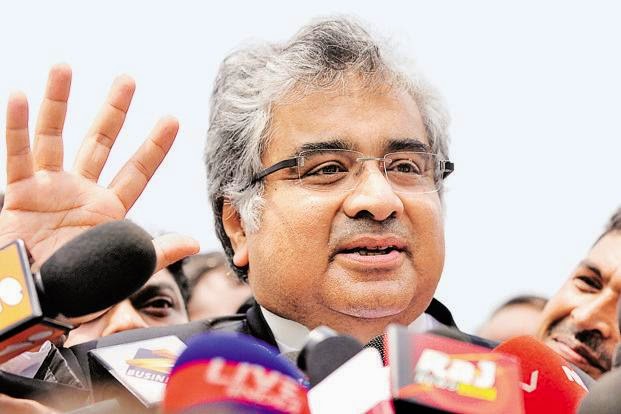
The second article referenced by Aparajita was an interview by well-known lawyer Harish Salve who is representing FT in this dispute. Salve’s interview is quite candid and he is hardly appreciative of TOI’s strategies in this litigation. We don’t know whether even Salve has received a notice for defamation. Given
Harish Salve - Image from here
that the notice served on Aparajita has taken objection to Salve’s comment, he too should have received a legal notice otherwise they really can’t sue Aparajita. A third article referenced by Aparajita was by a Mint reporter.

For those of you who have read Aparajita’s post, you will agree with me that there is nothing in her post which even remotely qualifies as defamatory. She has taken care to base each and every assertion on the Mint articles, which them-selves were a fair comment on an issue of public importance. The comments which were not based on the Mint article were also fair comments based on valid facts.

Even presuming, for sake of argument, that some facts were wrong in the post, the remedy is to send us a clarification, more so when the party making such an allegation, is a part of a media conglomerate that claims to publish one of the most circulated English papers in not just India but the world. It is not like the Times of India has never made an error in reporting and if they were to be sued for defamation every time they made a mistake they would have been bankrupt by now. Let me just point out to a few instances of poor reporting by the Times of India which we have documented on this blog. In November last year, we carried this post on how a particular news report in the Bangalore edition of the Times of India was nothing but an unattributed reproduction of a press release. We also carried other posts over hereand herewhere we pointed out the inaccuracy in ToI news reports.

The most egregious portion of the legal notice however is the threat of criminal action against Aparajita for alleged defamation. Egregious, since this comes from a newspaper. The Editors Guild of India has been campaigning for the abolition of criminal defamation laws because their reporters were constantly being threatened under these outdated laws and yet Times Publishing House thinks nothing of threatening criminal action against a 22 year old law student. What makes things worse is the fact that the move to have criminal defamation laws abolished was reported in the Times of India itself over here.

As our readers may know, last year, Shamnad was sued by NATCO for alleged defamation (you can read his defence here) and now Aparajita receives a legal notice threatening legal action – clearly blogging is becoming a riskier activity and the tragedy with increasing risk, is the possibility that bloggers will try to self-censor in the fear of offending giants like the Times Group.

We may not be as big as the Times Group but we are not going down without a fight. We are 100% behind Aparajita in this fight against the Times Group and if she is sued we will provide her with all support. If we submit to this defamation notice today, every Tom, Dick and Harry will be sending us defamation notices every time they are ‘hurt’ and in a country like this it does not take too much for eggshell egos to be hurt at the drop of a hat.
Read More
Posted in defamation, Media law, natco defamation suit | No comments

Sunday, March 17, 2013

Breaking News: Second Compulsory Licensing Application Filed

Posted on 1:30 AM by Unknown
Many of us wondered as to why there was no compulsory licensing (CL) application after Natco’s momentous victory in procuring India’s first CL more than a year ago. This licence was upheld only a week or so ago by the IPAB (the written order is expected anytime next week).  
 
It appears that the jinx has finally broken! We’re given to believe (from very authentic sources) that a second CL application was just filed at the Indian Patent Office (IPO) by BDR Pharmaceuticals International Pvt Ltd, a generic company headquartered in Mumbai.  BDR made patent news a month or so ago when it announced its intention to launch a generic version of Sunitib, whose patent had just been revoked after a hotly contested post grant opposition.

BDR's recent CL application covers Dasatinib, an anti cancer drug patented by BMS and mired in several legal controversies in India, including patent fights, DCGI controversies, as well as a defamation suit against me. 

Dasatinib has another interesting India connection, in that it is named after an Indian chemist, Jagabandhu Das, who co-discovered it while working at Bristol Myers Squibb.

These are the only facts that I have at the moment and I will update when I receive more information:  

1. BDR approached BMS for a license in early 2012. BMS responded asking for a rather extensive and elaborate set of documentation/facts. BDR sent a note to the patent office stating that it was clear that BMS was not interested in granting the license and that the information called for by BMS was irrelevant and nothing more than a delay tactic. Therefore, it considered BMS’ letter as a refusal. Given that more than six months elapsed since then, it filed a CL application with the Indian Patent Office.

2. BMS sells Dasatinib at Rs 1,68,000 (USD 3000 approximately) per month. In its application, BDR has offered to sell at Rs 8100 (USD 150). It has also offered to hand it out free to any patient that cannot afford the drug.

The Controller General of Patents (CG) is yet to issue a notice to BMS on the said application. One will recollect that this was an issue in the earlier CL case, where Bayer claimed that the Controller could not issue a notice, without first hearing the patentee and satisfying itself that a prima facie case had been made out. The IPAB recently disagreed stating that the CG need not hear the patentee and that a prima facie determination can be made on the basis of the CL application and the accompanying documents in support. 

It bears noting that Dasatinib was one of the three drugs considered for compulsory licensing by the government under the section 92 route. Unfortunately, after the initial announcement, the enthusiasm appears to have ebbed and one wonders if this was all sound and fury, signifying nothing? With this new CL application under section 84, will the government step back even more from the controversial section 92 route? Only time will tell.

The last two weeks have witnessed significant IP developments in India and we’ve been struggling to stay abreast with this “breaking” spree. The IPAB order upholding the compulsory licence was the first; we then had an Indian court endorsing a new tort of unfair competition to prevent alleged misappropriation of cricket scores. Followed by a controversial Madras High Court decision that permits lawyers to file and prosecute patents without a science/technical degree and a qualifying exam. And now, we have this new compulsory licensing application by a small spunky Indian company. We certainly need a break from this breaking spree!
Read More
Posted in Compulsory Licensing, DCGI, defamation, Indian patent litigation, IPAB, natco defamation suit, Patents | No comments

Monday, March 4, 2013

Compulsory Licensing is Not a Bad Word!

Posted on 10:29 PM by Unknown
And with this telling statement, Justice Prabha Sridevan, Chariman of the Intellectual Property Appellate Board (IPAB) began a marathon seven hour dictation in open court, upholding India/s first compulsory license order (in the post TRIPS era) in favour of Natco, a leading generic manufacturer.

Given that “compulsory licensing” has acquired rather malignant overtones in several circles (pun intended), it was only appropriate that the judge set the tone by beginning with this sentiment that will no doubt reverberate in the hallowed halls of patent jurisprudence for several years to come.

The ruling marked an important milestone in Indian patent history and represented a clear victory for patients and generic manufacturers. The case essentially revolved around the excessive pricing of an anti cancer drug Nexavar, patented by Bayer, a leading German pharmaceutical company. For more background on this case, you can see our posts here, here and here.
 
Reports on the Ruling:
 
Yesterdays’ ruling by the IPAB was reported first by Rumman Ahmed of the Wall Street Journal, where he notes:
 
"The appellate board, which is based in the southern city of Chennai, said the patent authority was right in allowing a compulsory license for Nexavar as Bayer hadn't priced the drug at "reasonably affordable" rates.

Bayer said it "strongly disagrees" with the conclusions of the appellate board and will pursue the case at the high court in Mumbai. The order "weakens the international patent system and endangers pharmaceutical research," the company said in a statement.
 
Natco welcomed the order. "This is a reasoned and detailed order that can be sustained in any court of law," said M. Adinarayana, Natco's company secretary.
 
The ruling was also captured by Jamie Love in a KEI briefing note and by Patralekha Chatterjee of the IPWatch.
 
SpicyIP Summary of the Ruling:
 
Our summary of the IPAB decision is as below. I am very grateful to Saranya Murugaiyan, a bright IP attorney from Chennai who filled me in on most aspects; she’s promised to offer us a more extensive note on the proceedings soon.  
 
Readers must note that this is only an oral pronouncement by the IPAB. The final version of the order (which will be based significantly on this pronouncement, but with minor changes in structuring, paragraphing, quotations etc) will be available on the IPAB website within the next week or so.
 
Justice Sridevan began by outlining the key issues at stake, went on to consider the rather lengthy arguments traversed by each set of counsels and then proceeded to issue her ruling on each issue. I’d already outlined 3 of the issues yesterday in my email to all SpicyIP subscribers. I reproduce it below in slightly better form (given that I’d shot off the email hurriedly whilst boarding a flight).
 
First set of Issues:
 
1. The CG (Controller General) need not hear the patentee prior to making a prima facie evaluation that a case for CL exists. It is only after the said prima facie evaluation that the patentee need be heard on whether the CL should be granted or not. This ruling responds to Bayers' argument that the CG had made a "prima facie" evaluation based solely on Natco's CL application and then proceeded to issue notice to Bayer.

2. Natco's offer for voluntary licence was valid in law and once it received a refusal from Bayer, it was not bound to go back to Bayer and plead again. As the judge quipped during the interim order phase, when she rejected Bayer's application to stay the CL order of the Controller General: Clearly Barkis was not willing!

3. Cipla's sale does not aid Bayers' case in any way, particularly since Bayer sued Cipla for infringement. Such allegedly "illicit" sales cannot be counted towards Bayer's "working" of  the patent.
As for the other issues, here is what the judge ruled.

Excessive Pricing:
 
1. Bayer sold the drug at an “excessive” price (Rs 2,80,000 a month) and was able to meet the requirements of only 2% of the patient population. Therefore, two of the grounds under section 84 had been satisfied, namely that: (i) that the reasonable requirements of the public with respect to the patented invention have not been satisfied, and that (ii) that the patented invention is not available to the public at a reasonably affordable price.

The "Working" Controversy:
 
2. The third ground for compulsory licensing under section 84 is that "that the patented invention is not worked in the territory of India." The judge differed slightly with the Controller of Patents, who held that "working" under section 84 cannot include mere imports; given that Bayer was merely importing Nexavar capsules into the country, it could not be said to have "worked the patent". The IPAB took a different stand, holding that “working” is a flexible term and can also admit of “imports” in some instances. This would depend on circumstances such as the technology in issue, whether the invention could be feasibly manufactured in India etc. However, it is not clear if “imports” in the present case had satisfied the working requirement, given that the patentee (Bayer) did not furnish any credible reasons for not manufacturing in India. I’ll write a detailed review after the main judgment is out and we have a clearer idea of the judges’ mind on this issue.

3. Bayer’s patient assistance program did not necessarily mean that it “worked” the patent adequately.

Royalty:
 
Apart from the “working” requirement, the judge also differed with the Controller in setting the royalty rates and hiked it from 6% to 7%. The judge appears to have based this hike on the fact that Bayer deserved more, given that Natco was offering its retailers a 30% margin on the sales.
  
Natco Lies to the Court: Yet Again!
 
Interestingly enough, the IPAB fined Natco for lying to the court that it possessed a process patent (covering a method of making a generic version for Nexavar), when its patent application was still pending and had not been granted as yet.

Natco attempted to brush off this misrepresentation, stating that it was an “irrelevant” fact (since the Controller of Patents never relied on this fact while issuing his order). The judges however were not amused and fined Natco 50,000 for this blatant lie and ordered that the money be donated to the Tata cancer research center. If only more judges were willing to castigate unethical litigants who stooped to win at any cost, we’d work up a wonderful budget for healthcare in this country.

Readers may recall another instance where I’d highlighted Natco’s misdeeds in the controversial Dasatinib patent infringement case. In the immediate aftermath of my articles highlighting Natco’s blatant misrepresentation, it filed a defamation case against me (as any corporate bully would), hoping to shut me up. Sadly, it could not have been more mistaken; owing to the wonderful support of several friends and well wishers (in the legal fraternity and outside), I’ve been able to put together a spirited defence and resist these cowardly attempts to quell free speech. 
 
Although Natco pushed for a restraining order against me on at least 3 separate occasions, the judge refused to grant it. For those interested, here is my written submission to Natco's baseless allegations. I have linked to this submission in this post here (see the last few paragraphs of the post).

Ps: The 7 hour open dictation session at the IPAB was not without its fair share of drama. My email to SpicyIP subscribers (during the lunch break yesterday) that the judge had already decided 3 issues and was likely to rule in favour of Natco did not go down well with Bayer’s counsels who objected to this pubic announcement. I was a little aghast, given that this was an open dictation in open court.

Incidentally, some of you have written, asking me to subscribe you for regular SpicyIP email updates. Please note that you can subscribe by simply clicking on the tab “Subscribe’. Please visit our homepage, and once there, do scroll down a bit and you will see the tab “Subscribe to SpicyIP” on the left side. Enter your email ID in the box below and you will receive regular SpicyIP updates in your inbox, including all blog articles without you having to visit our blog each time.
Read More
Posted in Compulsory Licensing, Indian patent litigation, Natco, natco defamation suit, shamnad | No comments

Friday, January 25, 2013

Patent Ambush: Big Pharma vs Generics

Posted on 12:45 AM by Unknown
The Economic Times (ET) reports that MNC drug firms have been deploying the RTI (Right to Information) route to launch aggressive patent ambushes against generic firms. 

I quote:

"Pharmaceutical multinationals have begun using the Right to Information law to launch pre-emptive legal action against local generic players to protect the market of patented drugs and delay the entry of low cost generic medicines in the 60,000-crore domestic drug market.

MNCs are using such information to sue generic firms even at a stage when their marketing approval is still pending or during the few months' window between the grant of approval and the actual product launch. This is a marked departure from their earlier strategy of launching patent infringement suit only after a generic firm rolled out a competing drug in the market."

Patent law suits are nothing new and quia timet actions are also prior art, so to speak. So nothing out of the ordinary here in using RTI information to sue, given that there is no other credible way to know if a generic manufacturer intends to launch a patented drug, than that of querying the DCGI (Drug Controller General of India) office and finding out.

Killing Promiscuous Injunctions?
 
But the mere factum of suing does not necessarily mean that big pharma is entitled to an injunction, much less an ex parte one. In a series of posts, Prashant, Rajeev and I reflect on the growing promiscuity of Indian courts in granting ex parte injunctions i.e. interim restraining orders that are passed without so much as hearing the other side.

Along with my students, I now plan to file a PIL (public interest litigation) soon requesting the Supreme Court to direct that no ex-parte restraining order be granted in any patent case, given that almost every patent case invariably involves a challenge to the very "validity" of the patent. How then can an order be passed without so much as hearing the other side? If any of you are interested in joining hands with us on this important fight, please email me.

Dispensing with Interim Injunctions

More controversially perhaps, I've advocated that Indian courts simply dispense with the "interim" phase and move directly to trial. The rationale is that the interim phase demands a "prima facie" evaluation of the merits of a dispute, which in a patent case,  can quickly convert to a rather lengthy evaluation, if one is serious about getting as close as possible to the right result. 

Any attempt to compress the prima facie evaluation phase is likely to yield wrong results i.e a patent found to be prima facie valid, ends up being struck down after trial, causing significant harm to generic competitors and more importantly to patients who are forced to contend with monopoly pricing till such time as the patent is finally knocked down!

My advocacy is not particularly fanciful, given that the Supremes have recommended something similar in at least two cases, given the extraordinary delays inherent in the so called "interim" phase. 

For those interested, an old paper of mine (presented at Kysuhu University) is available here (a significantly updated and revamped version of this paper will soon be published in a book edited by Professors Margo Bagley and Ruth Okediji).

Regulatory Opacity 

So back to the RTI route, which triggered the ET article. As I'd mentioned, its nothing out of the ordinary and one that we'd expect pharma patentees to deploy, given that our much maligned regulator (DCGI) is known more for its opacity and underhand dealings than its transparency. Don't take my word for it...read this scathing indictment by our Parliamentary committee which takes the DCGI to task for its unhealthy cosying up to both multinational and generic firms. 

Tellingly, as the report notes, most drug regulators begin their mission statement with an avowed objective of serving the public interest and ensuring the safety and efficacy of drugs. Our regulator on the other hand goes on record stating that its primary purpose is to "meet the demands and requirements of the pharmaceutical industry"! (see  pages 2-3 of the report: para 2.2). Great bedtime reading, and I'd recommend that at the very least, our readers subject this scathing report to a peek preview.

Back to the theme at hand. For those interested, I'd recommended that all drug marketing approval applications filed before the DCGI be published immediately on its website. Apart from making the DCGI more transparent and accountable, this would go a long way towards weeding unethical practices such as those deployed by Natco when it lied to the Delhi High Court and stated that it had no interest in the anti cancer drug Dasatinib, whilst at the same time having filed a drug application for a generic version of this drug before the DCGI. 

The Natco Defamation Suit

Had the DCGI been more transparent and uploaded all of its applications for drug approval, I'd have been spared the agony of a law suit. And the court might have been spared the agony of an unethical ride by a home grown pharmaceutical firm (Natco), that had just made news for its heroic efforts in standing upto a large multinational firm and procuring a monumental compulsory licensing order.

But then again, I'm glad they sued on such a weak case. Hopefully, we'll get an order that deters future corporate bullies from attempting to gag free speech (and dare I say, the truth)! For the record, I will continue writing and commenting on this case..all within the contours of the law of course and my constitutionally guaranteed freedom of speech. 

For those interested, my written statement countering Natco's non-sensical suit is here. This defence incorporates many of the arguments advanced by Prashant in his posts here and here.

ps: Each time I comment on a pharma patent issue, I get hit with the question: Which side are you on? I reiterate again that I'm not particularly fond of George Bush and his: "Either you're with us or you're against us" approach. 

I'd like to think that, as with the Novartis Supreme Court submission, I follow a strict issue based approach. While I come down on the side of the generics and/or patient groups on some issues, my conclusions end up favouring originator pharma companies on others. And once in a while, what I advocate ticks off both sides...perhaps a good place to be in for an academic, particularly one who advocates the middle path and holds the freedom of thought and expression very close to his heart..
Read More
Posted in Compulsory Licensing, DCGI, defamation, Drug Regulation, ex parte, Indian Pharma, Injunction, Natco, natco defamation suit, Patent, patent infringement, Pharma | No comments
Older Posts Home
Subscribe to: Posts (Atom)

Popular Posts

  • Guest Post: Intermediary liability in defamation cases - Parle, Mouthshut & Visakha cases to clarify the law
    Chaitanya Ramachandran, who has blogged for us previously over here and here , has sent us this excellent guest post analyzing the extent of...
  • SpicyIP Tidbit: An IP Thriller from an IP lawyer
    In an exciting first for the community of intellectual property lawyers in India, Dr. Kalyan Kankanala has penned a thriller novel based, w...
  • Computer Confusion Confounded
    Computer software patentability continues to confound. So says this caustic certiorari petition filed at the US Supreme Court, passed on by ...
  • Full Bench Delhi HC (Design Act)- Reckitt Benkiser India Ltd. v. Wyeth Ltd.
    Image from here A reference (order available here ) was made to a Full Bench of the Delhi High Court to consider as to what amounts to ‘prio...
  • DIPP notifies revocation of Avesthagen patent in Gazette; Patent Office announces new policy for TK related patent applications
    Image from here The Department of Industrial Policy & Promotion (DIPP), Government of India has officially notified, in the Gazette of I...
  • Novelty of Design: Tarun Sethi v. Vikas Budhiraja
    Name of the case : Tarun Sethi & Ors. v. Vikas Budhiraja & Ors. [Delhi High Court CS(OS) 1841/2008] Date of judgment : August 6, 20...
  • Guest Post: Court rejects Apple’s motion for Permanent Injunction against Samsung
    The Apple - Samsung tussle is one that has now almost frequently found its way into our blog . It's being watched so closely due to its ...
  • Rebutting arguments against multiple copyright societies
    Image from here . In response to my l ast post , I received a dismissive comment from Achille Forler, an insider from the music industry, wh...
  • October 2012: Controller's decisions at the IPO
    In the month of October, 2012 the Controller's offices issued 97 decisions.  Out of these 97, 52 decisions were granted (including defer...
  • IP Research Assistant position at IIT, Madras
    Feroz Ali Khader, MHRD IP Chair at the Indian Institute of Technology (IIT) Madras, is looking for research assistants to work on various is...

Categories

  • 126 (1)
  • 3(d) (4)
  • 3(f) (1)
  • 3(i) (1)
  • 3(k) (2)
  • Academic Writing (1)
  • access (10)
  • access to food (1)
  • access to health (3)
  • AIA (1)
  • AIDS/HIV (3)
  • Antitrust (2)
  • Bajaj v LML (1)
  • Basmati Row (2)
  • Biological Diversity (5)
  • Biologics (2)
  • biopiracy (4)
  • biotech (7)
  • Bollywood (25)
  • Broadcasters Rights (5)
  • Budget (1)
  • business method patent (2)
  • Call for papers (2)
  • Cipla (2)
  • Comparative Advertising (4)
  • Competition law (8)
  • Compulsory Licensing (27)
  • condonation of delay (1)
  • Conference (4)
  • Constitution (12)
  • Contracts (1)
  • Controller's decisions (8)
  • Copyright (112)
  • Copyright Amendment Bill 2010 (23)
  • copyright board (4)
  • Copyright Exceptions (6)
  • copyright office (1)
  • Copyright Rules (2013) (5)
  • Copyright Societies (9)
  • Counterfeiting (1)
  • creativity (1)
  • Cross Retaliation (1)
  • csir (4)
  • d (1)
  • D.U. Photocopy Case (16)
  • Darjeeling Tea (3)
  • Data Exclusivity (2)
  • Database (1)
  • DCGI (2)
  • decompilation (2)
  • defamation (9)
  • Designs (3)
  • Designs Act (3)
  • Differential Pricing (2)
  • Dilution (1)
  • Disabilities (3)
  • Disability (2)
  • DMCA (2)
  • Doha Declaration (1)
  • Domain Names (2)
  • Draft Policy of the Indian Government (2)
  • DRM (1)
  • Drug Regulation (7)
  • education (12)
  • Enercon (1)
  • Enforcement (1)
  • EU (2)
  • ex parte (2)
  • exhaustion (3)
  • Exhaustion of Rights (2)
  • Fair Dealing (8)
  • Fair Use (11)
  • Federal Circuit (1)
  • Fees (3)
  • FICCI (7)
  • FRAND (2)
  • free trade agreement (3)
  • FTA (3)
  • G.I. Registry (4)
  • gene sequences (3)
  • Generic medicine (4)
  • Geographical Indication (14)
  • Gilead (1)
  • Glenmark (5)
  • Gopika (34)
  • Guest post (11)
  • guidelines (1)
  • GWU-CII (1)
  • Herceptin (1)
  • hot news (3)
  • ICANN (1)
  • incremental innovation (1)
  • independence (1)
  • india (5)
  • Indian Government (1)
  • Indian patent litigation (27)
  • Indian Pharma (35)
  • Injunction (10)
  • Innovation (7)
  • INTA (1)
  • Intermediaries (10)
  • internet (11)
  • Internet Access Providers (IAPs) (5)
  • Internet Censorship (7)
  • IP scholarship (3)
  • IP aware (4)
  • IP Course (3)
  • IP Education (1)
  • IP Policy (11)
  • IP update (4)
  • ip writing competition (1)
  • IPAB (34)
  • ipchair (1)
  • IPO (1)
  • IPRS (5)
  • IT Act (1)
  • Journal (2)
  • judicial independence (3)
  • Jurisdiction (1)
  • Kruttika (4)
  • Legal Education (3)
  • Legal Research Tools (1)
  • Legal Scholarship (2)
  • library (2)
  • Licensing (7)
  • Madhulika (20)
  • mathematical methods (1)
  • Media law (3)
  • medical method (1)
  • Merck (4)
  • mhrd ip chair (1)
  • Microsoft (3)
  • Middle Path (1)
  • Moral Rights (2)
  • Movies (18)
  • musical work (2)
  • nanotechnology (1)
  • Natco (3)
  • natco defamation suit (5)
  • natco vs bayer (4)
  • need for transparency (1)
  • Novartis (8)
  • Novartis patent case in India (11)
  • NPEs (2)
  • nujs (1)
  • NUJS Conference (2)
  • Obituary (1)
  • obviousness (7)
  • Off-Topic (2)
  • online course (4)
  • Open Access (6)
  • Open Source (2)
  • Opposition (3)
  • Parallel Imports (4)
  • Parliament (1)
  • passing off (5)
  • Patent (52)
  • Patent act (10)
  • patent agent (5)
  • patent agent exam (9)
  • patent agent exam qualifications (3)
  • patent infringement (5)
  • Patent Licensing (2)
  • Patent litigation (2)
  • Patent Office (19)
  • patent pool (3)
  • Patent Prosecution (7)
  • Patent rules (2)
  • Patent Strategies (8)
  • Patents (9)
  • pegasus (1)
  • Personality Rights (1)
  • Pfizer (1)
  • Pharma (18)
  • Piracy (5)
  • plagiarism (3)
  • Plant Variety Protection (2)
  • post grant (1)
  • Prashant (2)
  • Preventive Detention (1)
  • Price Control (6)
  • prior publication (1)
  • Privacy (3)
  • Prizes (1)
  • public health (3)
  • Public Interest (4)
  • Publicity Rights (4)
  • Publishing (3)
  • radio (2)
  • Rajiv (18)
  • Rectification Petition (2)
  • Rejection (1)
  • research (3)
  • reverse engineering (2)
  • revocation (4)
  • rip (1)
  • Roche (2)
  • Roche vs Cipla (1)
  • Royalty (2)
  • RTI (2)
  • Scholarship (4)
  • section 16 (1)
  • Section 3(d) (7)
  • section 8 (6)
  • shamnad (11)
  • Shan Kohli (4)
  • Shouvik Kumar Guha (30)
  • Smartphones/Tablets (2)
  • Social Innovation (1)
  • Software (10)
  • software enforcement (3)
  • software patent (3)
  • Special 301 Report (1)
  • Spicy Tidbits (6)
  • spicyip (1)
  • SpicyIP Accolades (1)
  • SpicyIP Announcements (9)
  • SpicyIP Case (1)
  • SpicyIP Cases (3)
  • spicyip commiseration (1)
  • SpicyIP Events (11)
  • SpicyIP Fellowship (5)
  • SpicyIP Guest Series (22)
  • SpicyIP Interview (2)
  • SpicyIP Jobs (4)
  • SpicyIP Jobs/General (2)
  • SpicyIP Review (1)
  • SpicyIP Tidbits (11)
  • SpicyIP Weekly Review (27)
  • Statutory Licensing (1)
  • STI Policy 2013 (4)
  • Sugen (3)
  • Supreme Court of India (5)
  • Swaraj (19)
  • Tarnishment (1)
  • Technology (6)
  • Technology Transfer (5)
  • TKDL (5)
  • TPP (1)
  • trade (4)
  • Trade Secret Protection (1)
  • Trademark (59)
  • Trademark dilution (1)
  • Trademark Registry (9)
  • Traditional Knowledge (7)
  • Transparency (5)
  • treaty (1)
  • trial (1)
  • tribunals (2)
  • TRIPS (11)
  • UK (3)
  • unfair competition (5)
  • UNFCCC (1)
  • Universities Research and Innovation Bill (2)
  • US (1)
  • US Patent Reform (1)
  • US Supreme Court (3)
  • viva (3)
  • WIPO (5)
  • Working a Patent (2)
  • Workshop (4)
  • writ (1)
  • WTO (1)

Blog Archive

  • ▼  2013 (364)
    • ▼  September (13)
      • Guest Post: Intermediary liability in defamation c...
      • Breaking News: Kerala HC ends suo moto proceedings...
      • Copyright Amendments: A Fair Balance?
      • Eucador Trademark Registry decision on Gandhi Trad...
      • Computer Confusion Confounded
      • Microsoft - Nokia deal: A paradigm shift in the st...
      • IP Research Assistant position at IIT, Madras
      • Patent Hypocrisy and the Paradox of Indian IP
      • SpicyIP Tidbit: Zanjeer- Salim/Javed Settle with P...
      • Delhi HC rejects the "Hot News" Doctrine: A Summary
      • Bombay HC: Remake Zanjeer to be released
      • IPAB revocation of Allergan’s Combigan patent: Vie...
      • Cold News for Cricket Score Monopolies: India Reje...
    • ►  August (41)
    • ►  July (36)
    • ►  June (36)
    • ►  May (32)
    • ►  April (51)
    • ►  March (66)
    • ►  February (40)
    • ►  January (49)
  • ►  2012 (131)
    • ►  December (29)
    • ►  November (42)
    • ►  October (50)
    • ►  September (10)
Powered by Blogger.